
Pandi curry. Known for its deep, spicy flavors, tender pork pieces and distinctive tangy taste from kachampuli vinegar, this curry is a much loved delicacy. Slow cooked until all the flavors come together, it’s the kind of dish that keeps you going back for seconds. This simple, hearty dish is perfect with steamed rice.

Why I Love This Rich Pork Curry
There’s something special about a rich curry loaded with aromatic spices and succulent meat, and it’s an easy way to whip up a great meal any day of the week. I simply love following the authentic recipe that has been used for generations and perfect it every time I cook. And there’s a curry to suit every occasion, and this tangy pork curry is one of my favorites.
So, what makes this curry so special? The word “pandi” literally means pork, and the dish itself is recognized for its dark, thick gravy, generous use of spices and distinctive sour flavor. Unlike many Indian curries that rely on tomatoes, onions and creamy gravies, this pork curry celebrates the natural richness of pork and the complex flavors of roasted spices. One of its defining ingredients is kachampuli, a traditional souring extract that gives the curry its signature tang.
To make the perfect curry:
- Use good quality pork
- Roast the spices carefully
- Use authentic kachampuli vinegar, if available
- Cook slowly
- Balance the sourness by adding kachampuli gradually
Key Ingredients In Coorgi Pandi Curry
Pork - Traditionally, pork cuts with the right balance of meat and fat are preferred because the fat renders gradually creating a naturally thick and glossy gravy. The curry develops its flavor through the meat, rendered fat, spices and cooking liquid.
Kachampuli - It’s the souring extract that gives the dish its signature tang. Unlike ordinary vinegar, it has a distinctive concentrated sourness. Use it carefully because a small quantity can impart intense flavor and color to the dish. Also, finding kachampuli can be challenging, so feel free to use alternative souring agents such as tamarind paste.
Spices - Coriander seeds, cumin seeds, black peppercorns, mustard seeds, fenugreek seeds, cardamom pods, cloves.
How To Make Pandi Curry
Step 1 - Prep and marinate the pork
Cut pork into medium-sized pieces. Retain some fat, as it makes the curry rich and flavorful. Marinate with ground turmeric, red chili powder and salt.
Step 2 - Spice mix
Heat a pan over low heat. Add the whole spices including coriander seeds, cinnamon stick, cardamom, cloves, fenugreek seeds, mustard seeds, black peppercorns and cumin seeds. Roast gently until the spices release their aroma. Add a few curry leaves and fry until crisp. Remove from heat and allow them to cool. Avoid burning the spices, as this can make the masala bitter. Transfer the roasted spices into a mixer grinder. Grind to a smooth powder.
Step 3 - Onion paste
This paste is a simple combination of shallots, garlic, ginger and green chilies. Make sure you grind them into a smooth paste.
Step 4 - Make the curry
Heat a heavy bottomed pot. Add pork with onion paste and spice mix. You will also need the unique ingredient used in this recipe, kachampuli vinegar. Pour in water, and cook until tender. Stir occasionally to prevent sticking. Add small quantities of water if necessary.
Step 5 - Serve
Although this curry can be served as a side dish to any Indian meal, the traditional pairing of akki roti (rice flatbread), kadambuttu (steamed rice dumplings), noolputtu (rice noodles), or steamed rice are absolutely delicious.
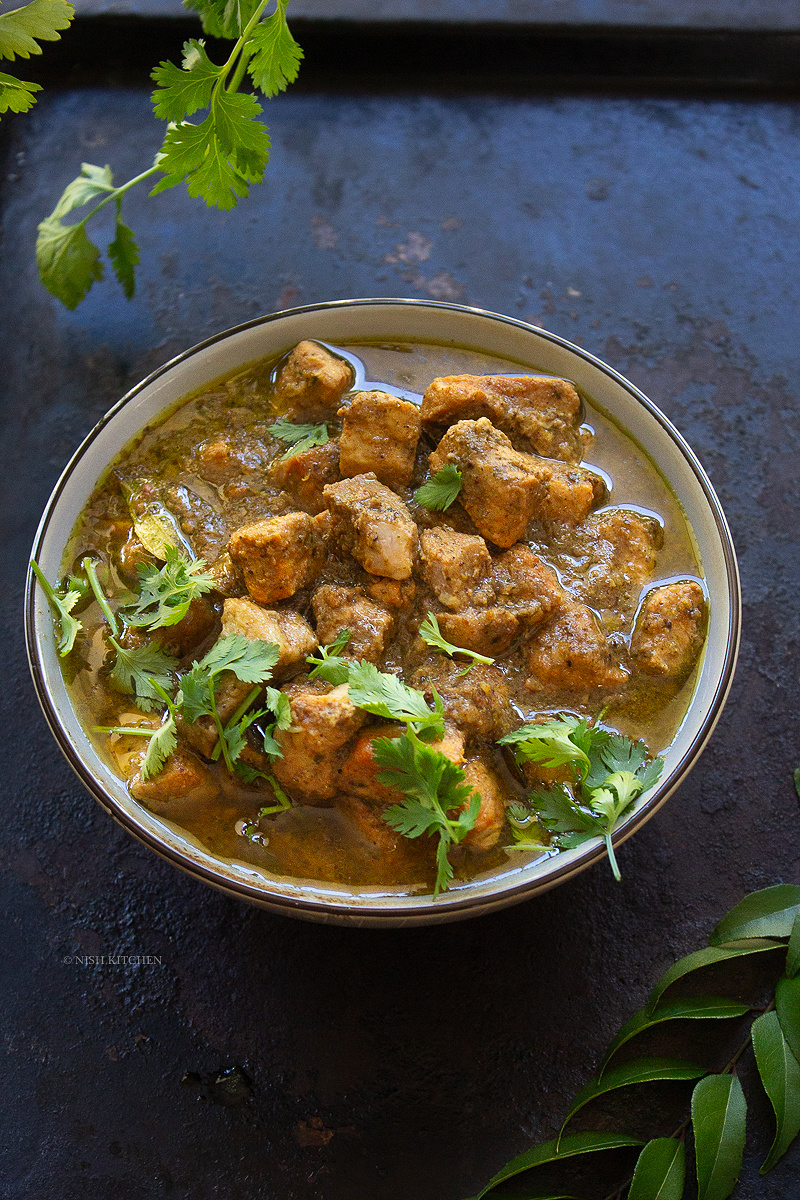
Coorgi Pandi Curry | Pork Curry
Ingredients
For marination:
- 700 g pork shoulder, cut into 2 cm cubes
- 1 teaspoon ground turmeric
- 1 teaspoon red chili powder
- Salt to taste
For spice mix:
- ¼ cup coriander seeds
- 2 teaspoons fenugreek seeds
- 2 teaspoons mustard seeds
- 2 teaspoons black peppercorns
- 1 teaspoon cumin seeds
- 1 inch cinnamon stick
- 4 cardamom pods
- 4 cloves
- 2 sprigs curry leaves
For onion paste:
- 3 shallots
- 3 garlic cloves
- 2 cm ginger
- 2 green chilies
For pandi curry:
- 1 teaspoon kachampuli vinegar (see notes) or 1 teaspoon tamarind paste
- 1 cup water
- Salt to taste
For garnishing:
- Coriander leaves (cilantro)
Instructions
Marinate pork:
- Place pork in a large bowl.
- Add ground turmeric and red chili powder. Season with salt.
- Toss to coat. Cover and marinate in the refrigerator for at least 30 minutes or overnight if time permits.
Make spice mix:
- Place a medium frying pan over low heat.
- Add coriander seeds, fenugreek seeds, mustard seeds, black peppercorns, cumin seeds, cinnamon stick, cardamom and cloves.
- Fry, stirring, for about 5-6 minutes or until the coriander seeds are lightly browned.
- Add curry leaves. Fry, stirring, for about 2-3 minutes or until the curry leaves are crisp.
- Remove from heat and allow to cool completely.
- Transfer to a food processor and process to a fine powder.
- Reserve 1 teaspoon spice mix.
Make onion paste:
- Place shallots, garlic, ginger and green chilies in a food processor.
- Grind to a coarse paste.
Make the curry:
- Place a heavy bottomed pan over medium-high heat.
- Add pork, onion paste, spice mix, vinegar and water. Stir to combine.
- Season with salt.
- Cook, covered, for about 50-55 minutes or until the pork is tender.
- Add reserved spice mix. Simmer for another 2-3 minutes.
Notes
- Kachampuli - The vinegar, used in the traditional recipe, can be substituted with tamarind paste.
Nutrition
Like this coorgi pandi curry recipe? Then join Nish Kitchen on Facebook, Pinterestand Instagram. watch exclusive recipe videos on YouTube.
Frequently Asked Questions About Pandi Curry
Can I use white vinegar instead of kachampuli vinegar?
Yes, but kachampuli gives the curry its distinctive flavor. White vinegar can provide acidity but the flavor will differ.
Why is my pandi curry not dark enough?
The color of the curry depends on the roasted spices, kachampuli and cooking juices. Genuine kachampuli is one of the key ingredients required for the classic appearance.





Leave a Reply